
What the coach can do
The coach compares your driving against the session’s reference lap, corner by corner, and talks to you about the differences that cost you time.
The structure of a corner
Section titled “The structure of a corner”The coach reads every corner in four phases, the same way a human coach would walk it:
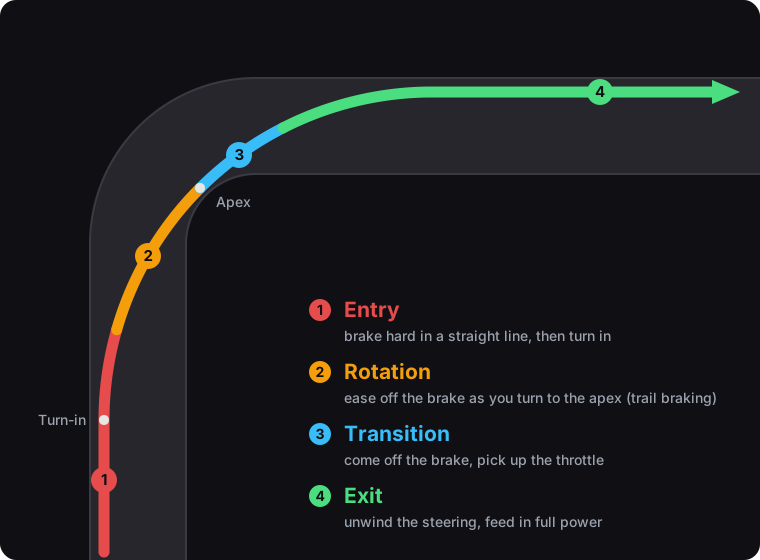
- Entry. The braking zone and turn-in: where you brake, how hard, and the speed you carry toward the apex.
- Rotation. Getting the car turned: trading brake (trail braking) for steering until the nose points at the exit.
- Transition. The handover from turning to accelerating: how early and how smoothly you get back to the throttle.
- Exit. The drive away: feeding in full power and the speed you carry onto the next straight.
A mistake in one phase spills into the next: brake too late and the rotation suffers; rotate too little and the exit pays for it all the way down the following straight. The coach identifies the cause of the time loss: it doesn’t just look at where you lost time, it analyses what caused it, often a phase upstream.
Different types of feedback
Section titled “Different types of feedback”- A correction after the corner. What went wrong and what to do instead, while the corner is still fresh.
- A reminder on the way in. Once it has told you something, it reminds you before the corner on the next lap, in time to act on it.
- Recognition when you fix it. Apply the change and it tells you, along with what the change gained you.
- Progress across laps. It remembers what it said and follows the same problem lap after lap, detecting improvement, regression and consistent mistakes.
Coaching focus
Section titled “Coaching focus”The coach focuses on the corners costing you the most time and prioritises those. Every new lap, it learns from your performance and updates its focus. All zone characteristics are taken into account: how much time you lost in each phase of a corner, and how much the corner’s performance impacts the straight or corner that follows.
The Coaching Sensitivity setting decides how small a loss is still worth mentioning: see Coaching sensitivity.
Coach attention
Section titled “Coach attention”The coach analyses your actions in real time and always picks the best available moment to speak.
- It does not talk over your hands. For instance, if it knows you’ll be hard on the brakes soon, it prefers to wait.
- When more than one thing needs saying about a corner, related problems arrive as one message, not a pile.
- It’s aware of laps with a penalty or a crash (outlier laps) and does not take them into account for coaching, unless a mistake contributed to that penalty or crash!
If it says less than you expected, that is usually deliberate. See The coach is not talking.